Laser Sources for Atomic and Optical Clocks
This page focuses on laser sources used within atomic and optical clock architectures. For the broader AMO wavelength map and parent application context, see Laser Sources for AMO and Quantum-Enabling Systems.

Atomic and optical clocks use an atom or ion as the frequency reference. A clock compares a controlled oscillator against a repeatable atomic resonance; in an optical clock, that resonance occurs at optical frequencies in atoms or ions.
Around that reference, laser sources support the measurement cycle. Cooling light prepares the atoms or ions for measurement. Repump and deshelving light return population to usable states. Lattice light can hold neutral atoms in a controlled optical environment. A clock-transition or reference laser then supports the frequency measurement itself.
Because the same clock may use several laser functions, a source is best understood by where it acts in the measurement sequence. In compact rubidium clock architectures, the 778 nm two-photon transition can serve as the optical reference. In strontium optical lattice clocks, cooling, repump, lattice, and clock-transition lasers work together around the same atomic reference. In ion-clock systems, clock/qubit, repump, deshelving, and state-recovery sources help maintain the interrogation sequence.
Within a clock architecture, the laser source sits in the frequency-control path rather than serving only as optical power. Its role may be tied to preparation, recovery, lattice support, vapor-cell referencing, or clock-transition access. For the narrowest optical-clock interrogation paths, the clock laser is often prestabilized to an ultra-stable optical cavity before interrogation, so each source role is best understood in relation to the clock architecture around it.
Selected Atomic and Optical Clock Source Wavelengths
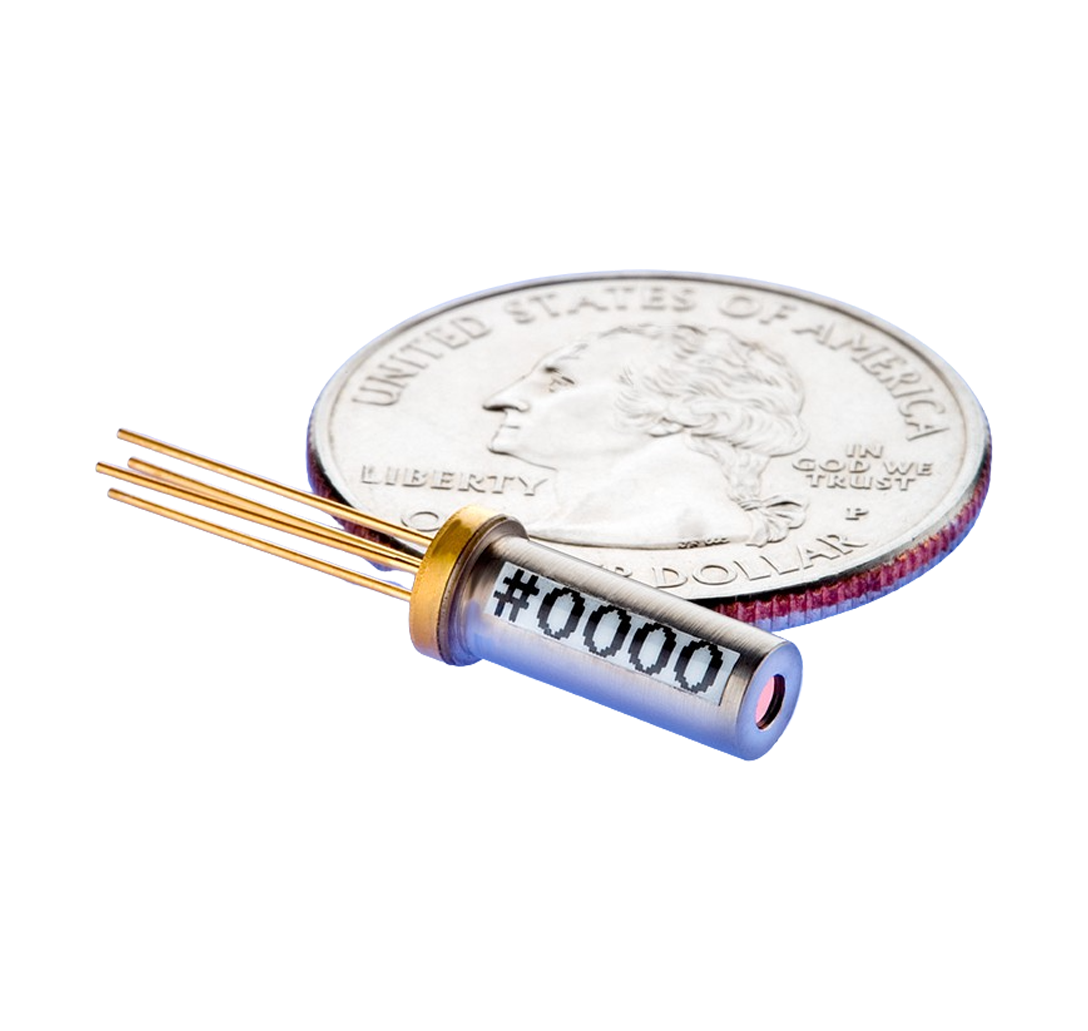
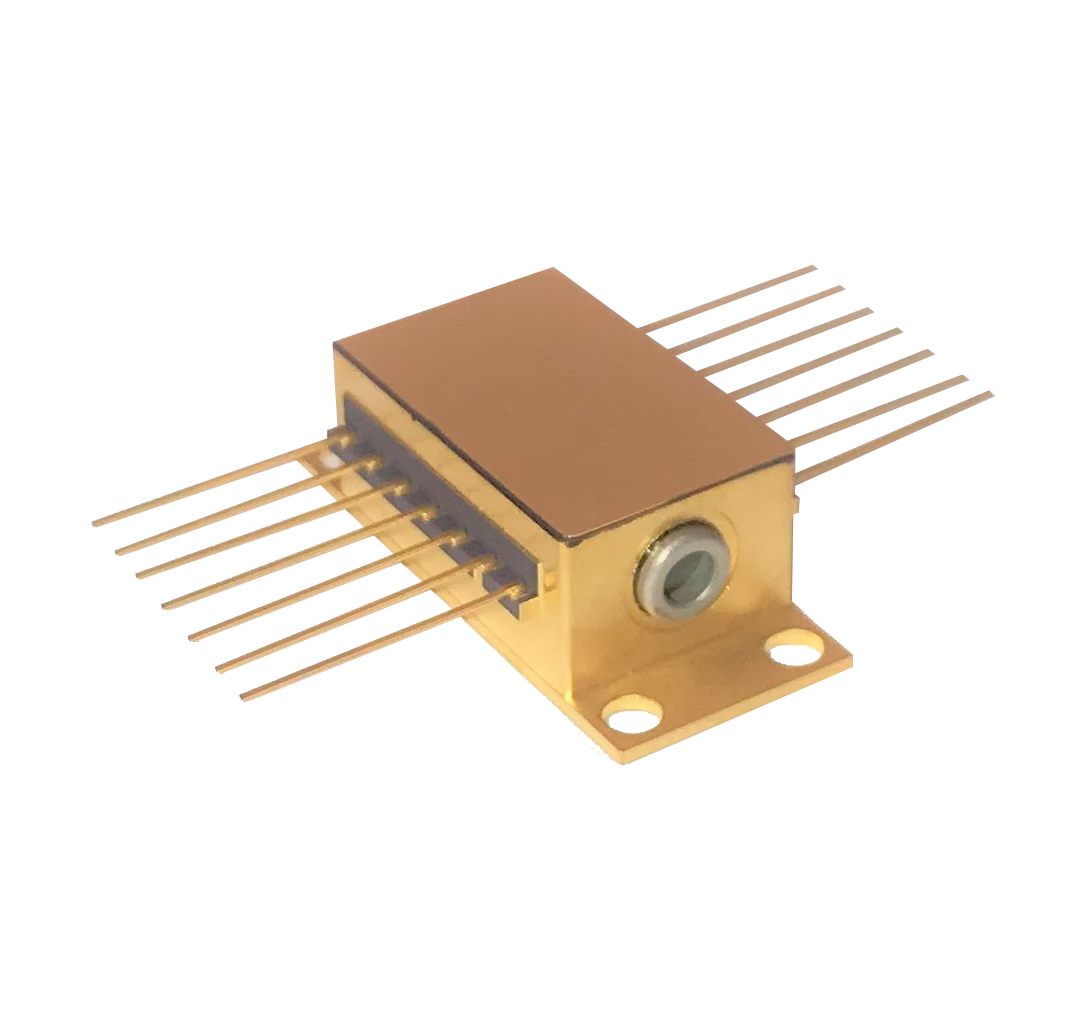
The table below highlights selected hybrid external cavity laser (HECL) wavelengths developed for clock-related source roles in AMO and quantum-enabling systems. If your target is not listed, IPS can review wavelength, package, output power, optical isolation, tuning, and integration requirements for your species and transition.
Atomic / Ionic Species | Laser Function / Role | Target λ, vac nm | HECL λ, vac nm | Access Method |
Rubidium (Rb) | Two-photon optical reference | 778.120 | 778.120 | Direct |
Rubidium (Rb) | Two-photon optical reference via SHG fundamental | 778.120 | 1556.240 | SHG |
Rubidium (Rb) | D₂ vapor-cell reference / clock-support role | 780.241 | 780.241 | Direct |
Rubidium (Rb) | D₂ vapor-cell reference / clock-support role via SHG fundamental | 780.241 | 1560.482 | SHG |
Rubidium (Rb) | D₁ optical pumping / vapor-cell atomic-clock support | 794.979 | 794.979 | Direct |
Cesium-133 (¹³³Cs) | D₂ vapor-cell atomic-clock support | 852.347 | 852.347 | Direct |
Strontium (Sr) | Repump return path for Sr clock architecture | 679.290 | 679.290 | Direct |
Strontium (Sr) | Narrow-line cooling / red MOT stage | 689.449 | 689.449 | Direct |
Strontium (Sr) | Clock-transition target access / source support | 698.446 | 698.446 | Direct |
Strontium (Sr) | Repump return path for Sr clock architecture | 707.202 | 707.202 | Direct |
Strontium (Sr) | Optical lattice / magic-wavelength support | 813.427 | 813.427 | Direct |
Strontium (Sr) | Blue-cooling access via SHG fundamental | 460.861 | 921.722 | SHG |
Ytterbium (Yb) | Neutral-Yb clock-transition target access via SHG fundamental | 578.420 | 1156.840 | SHG |
Calcium ion (Ca⁺) | Clock / qubit-transition source support | 729.347 | 729.347 | Direct |
Calcium ion (Ca⁺) | D₅/₂ repump / deshelving support | 854.444 | 854.444 | Direct |
Calcium ion (Ca⁺) | D₃/₂ repump support | 866.452 | 866.452 | Direct |
Ytterbium ion (Yb⁺) | Repump support | 935.188 | 935.188 | Direct |
Barium ion (Ba⁺) | Deshelving / reset support via SHG fundamental | 614.3415 | 1228.683 | SHG |
Table note: Target λ identifies the atomic or ionic application wavelength. HECL λ identifies the IPS laser-source wavelength. For rows marked SHG, the HECL source operates at the fundamental wavelength and the target wavelength is reached through second-harmonic generation.
Other clock architectures may use additional wavelengths depending on the species, level structure, and measurement sequence. Cesium vapor-cell and compact atomic-clock systems may use Cs D₁ light near 894.6 nm for CPT or optical-pumping clock workflows. Neutral ytterbium lattice clocks commonly combine 399 nm first-stage cooling, 556 nm second-stage cooling, 759 nm lattice light, and 578 nm clock-transition light; in some optical layouts, selected target wavelengths are reached from near-infrared source light through second-harmonic generation. Strontium-ion clock systems may use 674 nm clock-transition light with 1033 nm and 1092 nm recovery or repump paths. In each case, the wavelength becomes meaningful only when it is tied to the species, transition, optical path, and clock function it supports.
The selected wavelengths above support different parts of the clock measurement cycle. Rubidium and cesium sources can support vapor-cell and compact optical-reference timing paths. Strontium and ytterbium sources can support neutral optical-clock architectures where preparation, confinement, and clock-target access must work together. Calcium-ion, ytterbium-ion, and barium-ion sources can support selected ion-clock and clock-adjacent state-control paths where clock/qubit access, repump, deshelving, and population recovery help keep the interrogation sequence repeatable. Across these systems, each source role is defined by how that wavelength helps prepare, control, recover, confine, reference, or interrogate the atomic system for a stable frequency measurement.

Tell us more about your atomic and optical clock application needs.
Related Products
We offer a complete line of lasers for atomic clocks, including: